Newsletter
Construction updates, fascinating glimpses into our workshops, and highlights from our shop. Discover all this and more in our newsletter.
From 50 to 15,000—the development of a strong collection of Concrete Art
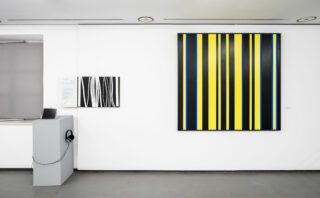
The acquisition of nearly fifty paintings, sculptures, and prints by renowned representatives of Concrete Art such as Josef Albers, Günther Fruhtrunk, and Verena Loewensberg from the collection of Eugen Gomringer (1925–2025), the “father of Concrete Poetry,” marked the beginning of the Museum of Concrete Art (MKK), opening in 1992. Since then, the collection has grown significantly. Together with the holdings of the Foundation for Concrete Art and Design (SKKD), it currently comprises nearly 15,000 objects across the genres of painting, sculpture, installation, printmaking, and video art. The collection also includes design with a clear connection to Concrete Art, such as works by representatives of the Bauhaus or the Ulm School of Design (HfG).
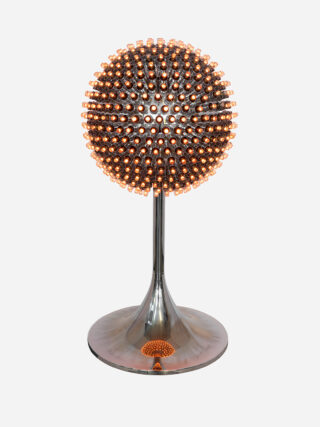
Otto Piene (1928–2014), Single Neon, 1972, chrome-plated metal, 220 V neon light bulbs, electrical components, 125 × 60 cm,
© VG Bild-Kunst, Bonn 2026; Photo: Museum für Konkrete Kunst und Design, Hubert P. Klotzeck
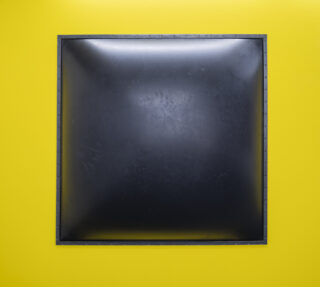
Wilhelm Koch (*1960), Untitled (Square), 1988, steel, rubber, air, 137 × 137 cm, © VG Bild-Kunst, Bonn 2026; Photo: Museum für Konkrete Kunst und Design, Hubert P. Klotzeck
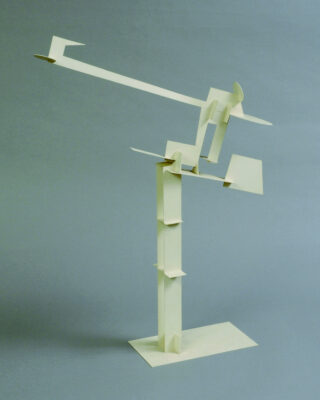
Alexander Rodtschenko (1891–1956), Raumkonstruktion Nr. 6 (Spacial Construction Nr. 6), 1918/1974, aluminum, paint, 68 × 52 × 13,5 cm, © VG Bild-Kunst, Bonn 2026; Photo: Museum für Konkrete Kunst und Design
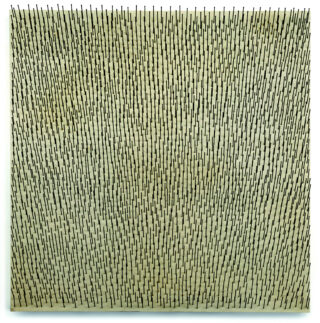
Günther Uecker (1930–2025), Regen. Zum Schweigen der Schrift. Hommage à Herrn Gomringer (Rain. On the Silence of Writing. Homage to Mr. Gomringer), 1972, canvas, nails, wood, 160 × 160 × 18 cm, © VG Bild-Kunst, Bonn 2026; Photo: Museum für Konkrete Kunst und Design
The range of collected works spans from the movement's beginnings to contemporary positions. A key focus of the collection is works by German-speaking artists from the postwar decades through the 1900s, including works by the Zurich Concrete artists around Max Bill and Richard Paul Lohse, as well as the ZERO artists Heinz Mack, Günther Uecker, and Otto Piene.
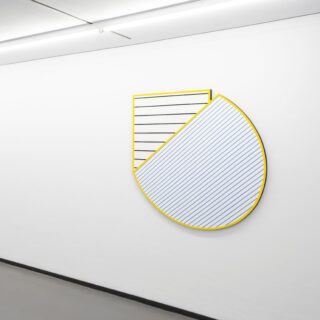
In recent years, the expansion of the collection has increasingly focused on works by younger artists. The goal is to reflect the further development of Concrete Art in contemporary contexts within the museum's holdings as well, thereby continuing to expand the canon.
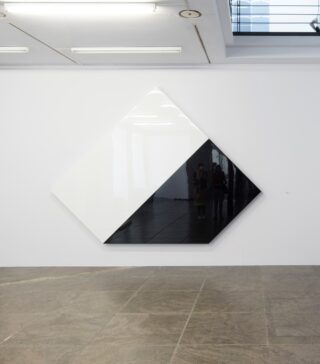
Gerold Miller (*1961), section 2, 2017, painted aluminum, 253 × 338 × 12 cm; Photo: Museum für Konkrete Kunst und Design, Hubert P. Klotzeck
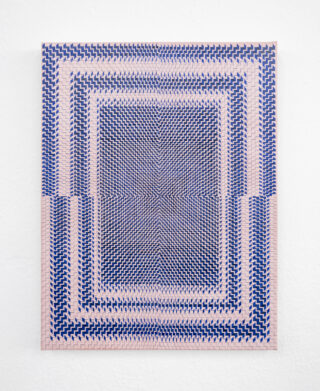
Toulu Hassani (* 1984), Untitled, 2023, acrylic and oil on canvas, 43,5 × 33,1 × 2,5 cm, © Toulu Hassani; Photo: Museum für Konkrete Kunst und Design, Hubert P. Klotzeck
Vladiana Ghiulvessi (*1994), Together II, 2020, acrylic on canvas, 120 × 120 × 4 cm, © Vladiana Ghiulvessi; Photo: Museum für Konkrete Kunst und Design, Hubert P. Klotzeck.